
Why Customer Service Is the Secret Weapon Most Nigerian Businesses Are Ignoring
Have you ever patronised a business and even though they delivered what was promised in terms of the product or service, you never went back just because of how they made you feel? That is the power of customer service, a secret weapon I believe most businesses, especially in the Nigerian market are underutilising. A good number of people are happy to pay a premium if it means they get a better experience. In a competitive market where margins are thin; differentiation is difficult; and customer loyalty is fragile, customer service is not a ‘nice to have’ —it is the single most powerful competitive advantage a business can develop. Yet most Nigerian business owners treat it as an afterthought, something to worry about after they have sorted out the ‘real’ business issues. Customer service IS the real business issue, and the sooner Nigerian entrepreneurs figure that out, the sooner they will start building businesses that actually last. The big question is, “how do we leverage customer service for business growth?”. Let’s start with defining the problem. The Nigerian Customer Service Problem. It’s Worse Than You Think Consumers more often than not rank customer service as one of the most important factors in their purchasing decisions, yet they consistently rate the quality of customer service they receive as poor to average across virtually every industry —banking, aviation, telecommunications, retail, hospitality, healthcare, transportation. The telecommunications sector is probably the most visible offender and there seems to be a consensus among providers never to treat their customers like kings. In aviation, flight schedules are routinely changed and no reprieve offered to customers who have to spend long hours at the airport waiting for a flight they are not sure would eventually take off. Despite the banking sector being one of the most profitable industries in Nigeria, customer service remains a persistent clog with many customers feeling stuck to their current provider because the competition is not any better. The retail sector, both formal and informal, suffers from the same malaise. Walk into a typical Nigerian establishment and observe the body language of the sales staff —arms folded, phone in hand, chatting with colleagues, barely making eye contact with the customer who has walked in. If you ask a question, you get a one-word answer. If you ask to see a different product, you get an eye-roll. If you haggle on price, you are treated as if you have committed a personal insult. The concept of a return policy is almost alien to most Nigerian businesses. Once they have your money, that transaction is over. Any attempt to return a defective product or request a refund is treated as an act of aggression. This attitude is so pervasive that many Nigerians have simply learned to accept bad customer service as normal, which is exactly the problem. When your customers stay just because the grass is not greener on the other side and not because they feel valued, there is a problem. The Economics of Good Customer Service: Why Good Service Is Good Business You might be wondering, if the average customer has learned to accept bad service as the norm, why should I go the extra mile for my customers in my business? This is where what I call the economics of good service comes in. According to the Harvard Business Review, acquiring a new customer is anywhere from five to 25 times more expensive than retaining an existing one. Also, research done by Frederick Reichheld of Bain & Company who invented the net promoter score shows increasing customer retention rates by 5% increases profits by 25% to 95%. Every time a customer walks away from your business because of bad service, you are not just losing that customer’s future purchases, you are also increasing your marketing and acquisition costs because you now have to find a new customer to replace the one you lost. Loyal customers buy more over time, they are less price-sensitive, they cost less to serve because they are familiar with your processes, and they refer new customers to your business through word-of-mouth. In Nigeria, where trust is scarce and word-of-mouth is the most powerful form of marketing, the value of a satisfied customer who tells their friends, family, and colleagues about your business cannot be overstated. Think about how you choose restaurants, mechanics, tailors, doctors, and virtually every other service provider. Most times, you simply ask people you trust for recommendations. A single satisfied customer who recommends your business to ten people is worth more than a million-naira advertising campaign, because those ten people come with a built-in trust advantage that no advert can provide. Conversely, the cost of bad customer service is devastating. Research from the historical White House Office of Consumer Affairs studies shows that dissatisfied customers tell 9 to 15 people about a poor experience. In the age of social media, those numbers are exponentially higher. A single negative review on Twitter or Instagram can reach thousands of potential customers within hours. Nigerian social media is particularly brutal when it comes to calling out bad business experiences. Remember those viral posts where someone shares a terrible experience with a business and thousands of people pile on with their own stories? Those threads have destroyed businesses, tanked reputations, and cost companies millions in lost revenue. And the businesses that fare the worst in those situations are the ones that respond poorly —deleting comments, arguing with customers, or going silent altogether. The businesses that survive and even thrive after negative publicity are the ones that respond quickly, take responsibility, fix the problem, and demonstrate genuine commitment to improving. Clearly, there is both a quantitative and qualitative case for making customer service central to your business. What World-Class Customer Service Looks Like If you want to improve your bottomline and build a community of loyal customers, you cannot treat customer service as something reserved for only “luxury” clients. Even a “problematic” client deserves a good experience with your
How to Build Multiple Streams of Income in Nigeria Without Burning Out
I used to wear my constant burnout like a badge of honor. I remember those years I was running myself ragged trying to make money from every angle possible. Working a full-time job during the day, freelancing at night, trying to trade forex in between meetings, running a small side business on weekends, and somehow convincing myself that sleeping three hours a night was a sign of hustle rather than a highway to the hospital. I thought that was what it meant to build multiple streams of income. I thought you had to grind yourself into dust, sacrifice your health, your relationships, your sanity, and your sleep just to have more than one source of revenue coming in. I was wrong. Dead wrong. In my defence, I had merely replicated the model of work around me. Nigeria is a side hustle-driven society and you might look like you aren’t trying enough or worse, foolish, if you do not have multiple things you are doing to make money. I am writing this because I see so many Nigerian professionals making the same mistake I made, confusing activity with productivity, confusing exhaustion with effort, and confusing the number of things they are doing with the quality of income they are generating. In this article, I will try to expose you to a sustainable framework for building multiple income streams. We Should All Be Hustlers We live in a society where the “grind” has premium social value. Even when there is no corresponding financial value, the mere fact that a person is seen to be trying their hands at multiple things is met with a nod of approval. While this is not necessarily a bad thing afterall, a moving man will one day meet his luck, the problem is that we might be overindexing on effort while forgetting to measure outcomes. So, a young professional working a 9-5 while running multiple businesses might be seen as working hard whereas none of the businesses is meeting any critical growth markers. The truth is that building multiple income streams is not just about doing more, it is about doing the right things, in the right order, with the right systems, so that your income grows while your stress levels stay manageable. It is not easy, I will not lie to you about that, but it is absolutely possible, and it does not require you to destroy your health and your relationships in the process. The ability to build multiple income streams matter so much for Nigerian professionals specifically. In most developed countries, a single good salary can provide a comfortable life — mortgage payments, car payments, utilities, food, healthcare, savings, and a vacation once or twice a year. In Nigeria, that calculation simply does not work for the vast majority of people. Even professionals who are considered well-paid by Nigerian standards — doctors, lawyers, engineers, bankers — often find that their salary alone cannot keep up with well…anything. For the majority, a single income stream is simply not sufficient for financial stability, let alone financial growth. This is not a character flaw or a failure of ambition, it is a structural reality of living in an economy where inflation consistently outpaces salary growth, where the currency loses value faster than most investments can compensate, and where the social safety net is essentially non-existent. Building multiple income streams is not a luxury in Nigeria, it is a survival strategy. Building Income Streams Sustainably Now, let’s talk strategy. The goal, remember, is not to stop grinding, it is to ensure that we are maximising output and building multiple income streams in a way that doesn’t lead to burnout. The Foundation: Stabilize Before You Diversify The biggest mistake I see Nigerian professionals make when they decide to build multiple income streams is starting too many things at once without having a stable foundation. They hear about someone making money from real estate, someone else killing it with e-commerce, another person doing well with content creation, and they try to do all of it simultaneously while still holding down their day job. Within three months, they are exhausted, none of the ventures are doing well because none of them are getting enough attention, their performance at their main job is suffering because they are distracted, and they end up worse off than when they started — financially, physically, and emotionally. Please do not do this. The first and most important principle of building multiple income streams is to stabilize your primary income before you diversify. Your primary income whether it is a salary, a business, or freelance work is your foundation. Stabilizing your primary income means several things. First, it means making sure you are earning as much as you can from your primary occupation. If you are employed, have you negotiated your salary recently? If you are a freelancer or business owner, are you pricing your services appropriately? Are you serving the right clients or customers? Are there ways to increase your revenue from existing clients before chasing new ones? Second, stabilizing your primary income means building an emergency fund, at least three to six months of living expenses set aside in a place where you can access it quickly but will not be tempted to spend it on non-emergencies. Putting away your emergency fund in a money market fund offers this critical balance. Third, stabilizing your primary income means getting your financial house in order. That is understanding exactly how much you earn, how much you spend, where your money goes, and where the leaks are. Most Nigerian professionals, if they are honest with themselves, are spending money on things that do not align with their priorities, and plugging those leaks can free up significant capital for investment in additional income streams. Understanding What You Are Building: Income Stream Categories Before we get into specific strategies, it is important to understand the different categories of income streams, because not all income streams are created equal, and
Why Nigerian Businesses Must Take Cybersecurity Seriously Before It Is Too Late
Many small and medium-sized businesses in Nigeria think about cybersecurity as something only big corporations and government agencies have to prioritise. In reality, because small businesses form the backbone of Nigeria’s economy and often have weaker defenses, they are the easiest targets for cybercriminals. The scale of the cybersecurity threat facing Nigerian businesses is staggering and growing every day, driven by the rapid digitization of the Nigerian economy, the increasing sophistication of cybercriminals, and the pervasive lack of cybersecurity awareness and investment among Nigerian businesses. Managing cyber risks has become a big part of building a business today. Regardless of the size of your business, you must incorporate cybersecurity strategies that would protect your business from cyberattacks that could lead to financial ruin, reputational damage, or total operational collapse. Common Cyber Threats Targeting Businesses Understanding the threat landscape is the first step towards protecting yourself. Hence, it is important to identify some of the most common threats that businesses face today. Business Email Compromise (BEC) targets people, not technology. By hacking or impersonating legitimate accounts, attackers trick employees into diverting funds or sharing sensitive data. BEC bypasses technical security by exploiting human trust, losses from BEC exceed billions of dollars annually, and Nigeria is both a major source and a major victim of BEC attacks. Ransomware is a rapidly growing threat to businesses. In a ransomware attack, criminals use malware to encrypt a company’s files, databases, and systems, rendering them completely inaccessible, and then demand a ransom payment, usually in cryptocurrency in exchange for the decryption key. Ransoms range from hundreds of thousands to billions of naira, yet paying never guarantees data recovery. Beyond the immediate extortion, the operational downtime often leads to lost revenue, regulatory fines, and long-term reputational damage. Malicious actors flood company servers or websites with overwhelming traffic, causing system crashes and severe service disruptions. The Nigeria Computer Emergency Response Team (ngCERT) warns that a sustained wave of Distributed Denial-of-Service (DDoS) attacks are increasingly threatening Nigeria’s critical digital infrastructure, with both public and private sector organisations under heightened risk. Fraudulent emails, text messages, or websites designed to trick people into revealing passwords, financial information, or other sensitive data is another common entry point for virtually all types of cyber attacks, including BEC and ransomware. Nigerian businesses are particularly vulnerable to phishing because of low levels of cybersecurity awareness among employees, the widespread use of personal email accounts and devices for work purposes, and the general culture of clicking on links and opening attachments without verifying their legitimacy. I have only highlighted the above as they are the most common forms of cyberattacks targeting businesses. There are other examples of cyber attacks targeting businesses such as Supply Chain Attacks, and SQL Injection & Zero-Day Exploit among others. Why Small and Medium Businesses Are the Most Vulnerable There is a dangerous misconception that cybercriminals only target large corporations because that is where the big money is. This could not be further from the truth. Small and medium-sized businesses are disproportionately targeted by cybercriminals precisely because they tend to have weaker security defences, less cybersecurity awareness, and fewer resources for incident response and recovery. A cybercriminal might not be able to steal a billion naira from a single business, but they can steal ten million naira each from a hundred small businesses with a fraction of the effort it would take to breach a major bank or telecom company. According to Kaspersky, 86% of small and medium sized businesses encountered cybersecurity incidents over the past year. The average cost of a cyber attack for a small business is often enough to threaten the viability of the entire enterprise. In the Nigerian context, where most businesses operate with thin profit margins, limited cash reserves, and no cyber insurance, a single significant cyber attack can be an extinction-level event forcing the business to close permanently because it simply cannot absorb the financial loss or recover from the operational disruption. The vulnerability of Nigerian SMEs is compounded by several factors that are specific to the Nigerian business environment. First, most Nigerian SMEs do not have dedicated IT staff, let alone cybersecurity specialists. Technology decisions are often made by the business owner or a generalist office manager who may have basic computer skills but no expertise in cybersecurity. Second, the rapid digitization of Nigerian businesses driven by mobile payments, online banking, e-commerce, cloud computing, and social media marketing has dramatically expanded the attack surface for cybercriminals without a corresponding increase in security awareness and investment. A small business owner who used to operate entirely in cash and paper now has a POS terminal, a mobile banking app, an Instagram business account, a WhatsApp business number, and a cloud-based accounting system, each of which represents a potential entry point for cybercriminals. Third, the BYOD (Bring Your Own Device) culture that is prevalent in many small Nigerian businesses creates significant security risks because employees are accessing sensitive business data and systems from personal phones and laptops that may be infected with malware, connected to unsecured public Wi-Fi networks, or shared with family members and friends. The Human Factor: Your Employees Are Your Biggest Security Vulnerability Cybersecurity professionals have a saying: humans are the weakest link in the security chain, and this is especially true in the Nigerian context where cybersecurity awareness and training are virtually non-existent in most organizations. Think about how many times a day your employees click on links in emails without checking where they lead, open attachments from unknown senders, use the same password for their personal email, their bank account, and their work systems, share sensitive business information over WhatsApp without encryption, connect to public Wi-Fi at hotels, airports, and coffee shops while accessing company systems, and leave their laptops unlocked and unattended in public spaces. Each of these behaviours represents a potential security breach waiting to happen, and in an organization with dozens or hundreds of employees all engaging in these risky behaviours simultaneously, it is only
How to Build Credit and Financial Credibility in Nigeria When the System Seems Rigged Against You
The uncomfortable truth about credit and financial credibility in Nigeria is that the system is, in many meaningful ways, rigged against ordinary people, and pretending otherwise would be dishonest. Unlike countries like the United States where a centralized credit scoring system like FICO tracks your credit history and makes it possible to build creditworthiness over time through responsible borrowing and repayment, Nigeria’s credit infrastructure is fragmented, underdeveloped, and barely functional for the vast majority of the population. Unfortunately, many Nigerians are internalising this systemic failure as something that they need to fix behaviourally. It is not uncommon to hear a Nigerian say that Nigerians do not “know how to” leverage credit when the reality is that most Nigerians do not have access to credit. Despite significant improvement in the last few years, many Nigerians are still invisible to the formal credit system with no credit history, credit score or a pathway to build one through normal channels. Why the Nigerian Credit System Is Broken and Who Benefits From Keeping It That Way The current system where banks require landed property as collateral for virtually all lending, massively favors people who already have wealth, particularly those who inherited property or accumulated it during earlier periods of Nigerian history when real estate was cheaper and more accessible. If your father or grandfather bought property in Lagos or Abuja thirty or forty years ago, you have access to collateral that can unlock millions of naira in bank credit, regardless of your actual business acumen or ability to repay. If you are a first-generation entrepreneur from a family without property, you are essentially locked out of bank credit no matter how brilliant your business idea or how strong your revenue, because the banks have decided that your human capital, your skills, your track record, and your future earnings are worth nothing as collateral. This is not just unfair, it is economically irrational, because it systematically directs capital toward people with inherited assets rather than people with the highest likelihood of generating returns, which is exactly backwards from how a functional credit market should work.In our current credit system, it is not just the work of your hands that is judged, it is the property you have. The Central Bank of Nigeria has made various policy interventions to try to expand access to credit, including various interventions targeted at specific sectors and regulations requiring banks to dedicate a certain percentage of their deposits to lending to small and medium enterprises. But the fundamental structural problem persists: Nigerian banks are incentivized to minimize risk rather than maximize economic impact, and in an environment where contract enforcement is slow and unreliable, property collateral is the easiest way for banks to protect themselves against default. This creates a circular trap where people without property cannot get loans, people without loans cannot grow their businesses fast enough to acquire property, and the wealth gap between the propertied and the property-less continues to widen with each generation. The fintech revolution is beginning to crack this system open, but slowly, and not without its own problems. Companies like Carbon (formerly Paylater), FairMoney, Branch, and Renmoney have developed alternative lending models that use smartphone data, transaction history, social media presence, and other non-traditional data sources to assess creditworthiness and provide loans without traditional collateral. These platforms have dramatically expanded access to credit for millions of Nigerians who were previously completely excluded from the formal lending system. However, the interest rates charged by many of these platforms are extremely high, often ranging from 5 to 30 percent per month, which translates to annual percentage rates of 60 to 360 percent or more. While these rates are partly justified by the higher default risk associated with unsecured lending, they also mean that fintech credit is expensive credit, and borrowers who are not extremely careful about how they use it can quickly find themselves trapped in debt cycles that make their financial situation worse rather than better. The emergence of these platforms is a positive development, but it is a partial solution at best, and it does not address the fundamental need for affordable, long-term credit that enables real business growth and wealth building. Building Your Financial Credibility From Zero — The Step-by-Step Approach We know what the problem is and we have spent considerable time discussing it. However, as an entrepreneur you have neither the resources nor the capacity to fix the systemic issues that we have addressed earlier. What this translates to in practical terms is that you must learn to navigate the credit system as it is while continually advocating for what we want it to become. How do you do this? Building financial credibility in Nigeria requires patience and discipline that most people underestimate. The first step is to formalize your financial life completely. This means opening accounts at multiple banks, not just one, because having relationships with several financial institutions creates more opportunities and gives you redundancy if one bank fails you. Ensure you have a savings account, a current account, and ideally a domiciliary account for foreign currency if you have any international income or transactions. Use these accounts actively, making regular deposits and withdrawals that create a transaction history demonstrating consistent financial activity. Creditors assess your creditworthiness partly based on your account activity, and an account with regular, consistent transactions over a period of years tells a very different story than a dormant account that only receives the occasional deposit The second step is to build a relationship with your bank that goes beyond the transactional. This sounds old-fashioned in the age of mobile banking, but personal relationships still matter enormously in banking. Get to know your account officer by name. Visit the branch regularly enough that the staff recognize you. When you have good financial news, like landing a new contract or reaching a revenue milestone, share it with your account officer. When the bank offers financial products like fixed deposits or treasury bill investments, participate,
Why Nigerian Customer Service Is an Oxymoron: The Anti-Customer Economy
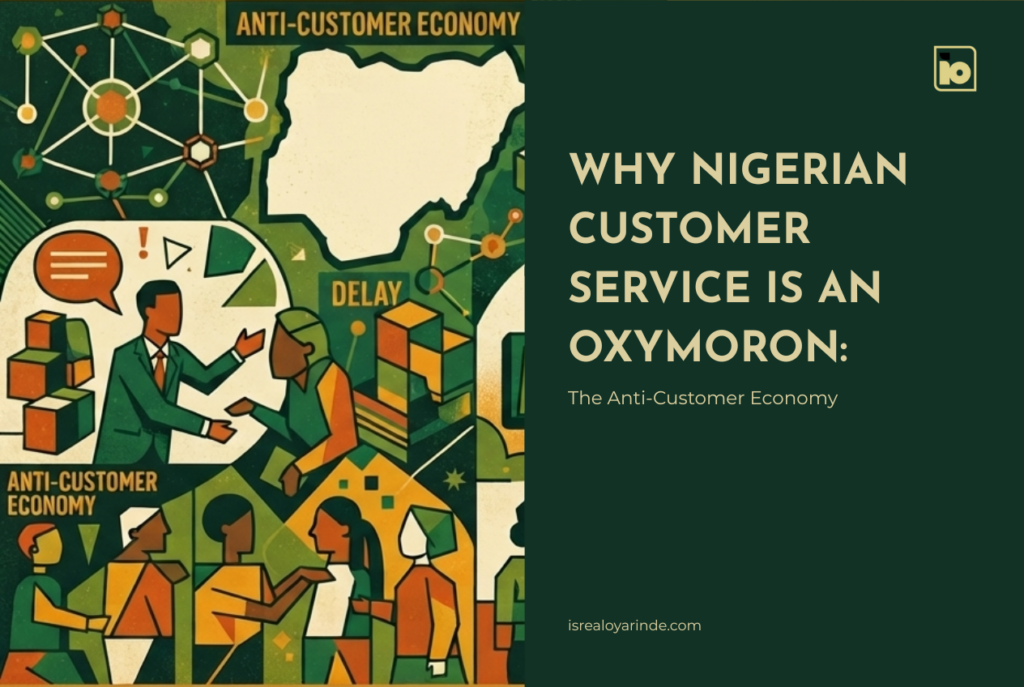
Customer service is supposed to help you resolve whatever issues you may have with a customer and potentially save you time, energy, and money. Unfortunately, customer service is sometimes designed to make you accept a bad product or service so that you don’t end up losing more than you already did. We have all been there. And it does not matter what the service is, the experience is almost uniform; at the bank, at the telecom office, at the passport office, at the airline counter, at the hospital reception. You walk in as a paying customer, and you are treated like a beggar asking for free rice at a politician’s rally. You are shuffled around, or worse ignored, insulted, lied to, and made to feel like you should be grateful they even acknowledged your existence. Businesses have normalised treating paying customers like garbage and I am sick of it. I am concerned about this issue not just as a customer who wants full value for their money but also as an entrepreneur who wants the business ecosystem to be driven by excellence and not just an acceptance of “quality mediocrity”. The ‘Take It or Leave It’ Mentality: Where Did This Come From? According to a PwC survey on customer experience, 73% of consumers globally say customer experience is a key factor in their purchasing decisions. If customer experience is so important, why are businesses choosing to ignore it? We live in a country where businesses seem to be actively punishing you for being their customer. Welcome to the anti-customer economy. To understand why Nigerian customer service is the way it is, you have to understand the psychology behind it. And that psychology is rooted in scarcity and a culture of deference to any semblance of authority. For decades, Nigeria has operated as a scarcity-driven economy. There were not enough goods, not enough services, not enough infrastructure. When you are the only person selling bread in a village of five thousand hungry people, you do not need to smile or say ‘please’ or ‘thank you.’ That scarcity mindset never left. Even as the economy grew, even as competition entered certain sectors, the fundamental attitude of Nigerian business owners and their staff remained the same. The business believes they are doing you a favour by existing and the customer has simply learned to accept this dynamic as normal. This mentality pervades every type of business across every sector. From the woman selling tomatoes at Mile 12 who will curse you out for asking for a discount, to the multinational bank that will make you wait three hours to resolve an error they created. The attitude is the same: take it or leave it. And because Nigerians have been conditioned to take it, businesses have had zero incentive to change. The Monopoly Effect: Why Competition Alone Cannot Fix This The standard economic argument is that competition fixes customer service. When customers have choices, businesses that treat them poorly lose them to competitors that treat them better. This is a beautiful theory that works in countries with functional market structures. In Nigeria, it collapses for several reasons. First, many sectors have oligopolies, not true competition. If there is one industry that perfectly encapsulates everything wrong with Nigerian customer service, it is telecommunications. These companies have over 200 million subscribers combined, and they treat every single one of them like disposable waste. The Nigerian Communications Commission publishes subscriber data showing massive numbers, but nobody publishes the millions of hours Nigerians waste every year trying to get basic issues resolved with their network providers. The telecom sector has four major players, all of whom provide equally terrible customer service. Switching from MTN to Airtel because of bad customer service is like jumping from a frying pan into a different frying pan. The pan is a slightly different colour, but the heat is exactly the same. Banks? Same thing. There are over twenty commercial banks in Nigeria, and the customer service difference between them ranges from ‘bad’ to ‘slightly less bad.’ There is no bank that has genuinely cracked the code of consistent, excellent customer service across all touchpoints. Second, switching costs are artificially high. Porting your phone number is a bureaucratic nightmare. Changing banks requires updating direct debits, salary accounts, BVN linkages, and a dozen other things that make the process so painful that most people simply endure the devil they know. These switching costs are not accidental. They are designed to trap customers in relationships they would otherwise leave. Third, and this is the most important point, competition only drives better service when customers actually punish bad service by leaving. Nigerian customers have been so thoroughly beaten down by decades of terrible treatment that they have developed a form of learned helplessness. They do not expect good service. They do not demand it. According to Harvard Business Review, acquiring a new customer costs five to twenty-five times more than retaining an existing one. Nigerian businesses have not internalized this data because they have never had to. In an economy where customers do not leave, retention is free. And when retention is free, investing in customer service is seen as an unnecessary cost, not a competitive advantage. Government Agencies: The Undisputed Champions of Anti-Customer Service If Nigerian private sector customer service is bad, government agencies are on a different level entirely. The undefeated champions of terrible service delivery. At least with a private business, there is a theoretical possibility that a competitor could emerge and steal their customers. With government agencies, you have no choice. You cannot get your passport from a private company. You cannot register your business with an alternative CAC. You cannot get your driver’s license from a competitor. They have a monopoly on the services you need. They know it and they behave accordingly. The Nigeria Immigration Service passport application process is a masterclass in institutional contempt for citizens. You pay online, you book an appointment, you show up on time,
The Reputational Cost of Yahoo Yahoo: How Cybercrime Destroyed Nigeria’s Brand
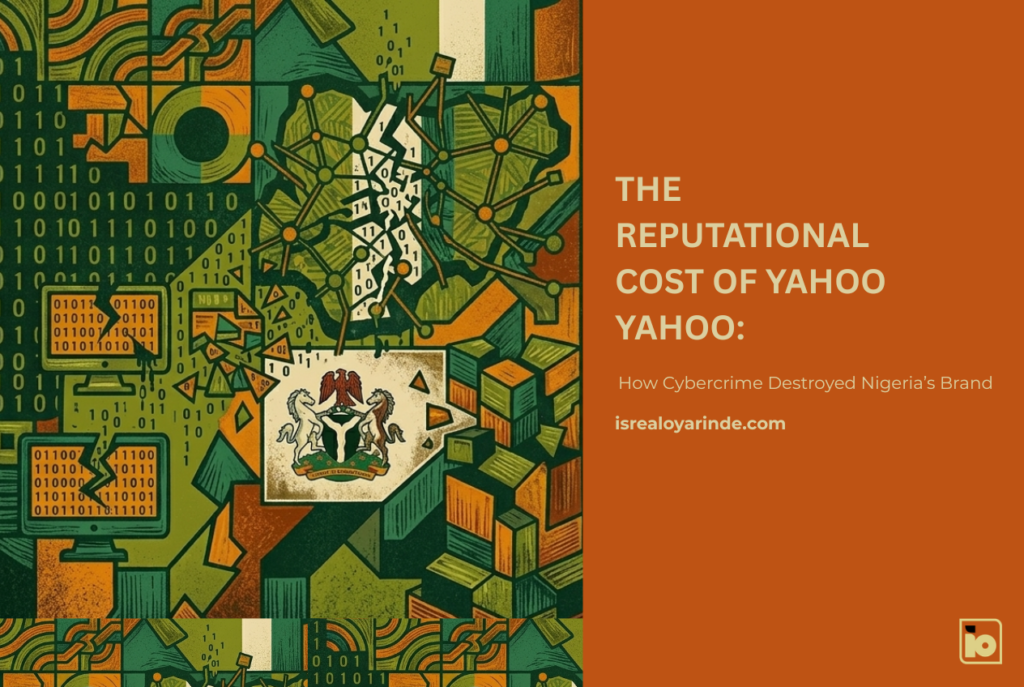
I have spent my entire career building legitimate businesses, paying taxes, following rules, and yet I get treated like a suspect because of where I was born and the colour of my passport. The Nigerian passport means potential fraud risk. That is the global assumption. That is what yahoo yahoo has done to us. For those who are not familiar with Nigerian slang. Yahoo yahoo is the colloquial term for internet fraud. 419 scams, romance scams, business email compromise, and every other form of cybercrime that has become associated with Nigeria. The damage to Nigeria’s reputation has only gotten worse over the years despite repeated crackdowns on suspected cyber criminals. This is not an essay about the morality of cybercrime. Of course, it is wrong. Of course it is theft. That should go without saying. What I want to talk about is something that gets less attention. The enormous ongoing economic cost that cybercrime has imposed on every single Nigerian, including the overwhelming majority who have never scammed anyone. Yahoo yahoo has not just stolen money from foreign victims. It has stolen opportunity from every honest Nigerian trying to do business in the global economy. The Brand Is Broken Let me start with a concept from business: brand equity. A brand is not just a logo or a name. It is a set of associations that people carry in their minds. When you hear Swiss, you think precision, quality, reliability. When you hear Japanese, you think innovation, efficiency, discipline. When you hear Nigerian… you think scam. This reputational damage did not happen overnight. It was built, email by email, scam by scam, over three decades. From the 419 letters of the 1990s to the sophisticated business email compromise schemes of the 2020s, Nigerian cybercriminals have systematically destroyed the country’s brand and the rest of us are paying the price. I have heard young Nigerians argue that yahoo is a response to a failed system, that the government has failed them and they are just surviving. I understand the frustration. I understand the sapa. But let me be blunt: every naira a yahoo boy steals costs the rest of us a thousand naira in lost opportunity. You are robbing your fellow Nigerians the ability to participate in the global economy without suspicion, without extra scrutiny, without being treated like criminals. Visa Rejections and Travel Bans The most visible cost of Nigeria’s fraud reputation is in visa processing. Nigerian passport holders face some of the most stringent visa requirements in the world. Most countries require Nigerians to go through lengthy, expensive, and humiliating visa application processes. The refusal rate for Nigerian visa applications to many western countries is among the highest for any nationality. I know of doctors, engineers, professors, and business executives who have been denied visas despite having impeccable credentials, strong ties to Nigeria, and no reason whatsoever to overstay or commit fraud. The denial letters are always vague but everyone knows the real reason. The Nigerian passport carries a stigma that no amount of documentation can fully overcome. There are numerous cases of accomplished Nigerians being denied visas for conferences, medical treatment, and business meetings. The japa phenomenon has made this worse. As more Nigerians leave the country, immigration authorities in destination countries have become even more suspicious of Nigerian applicants. The logic, unfair as it is, goes like this: Nigerians are likely to overstay their visas, and some Nigerians are involved in fraud, therefore every Nigerian applicant deserves maximum scrutiny. This creates a vicious cycle. Legitimate travellers are denied visas, which encourages people to use irregular channels, which further damages the reputation, which leads to more denials. The economic cost of visa restrictions is enormous. Nigerian businesses that could be doing deals in Europe and America are instead confined to the African market because their executives cannot travel freely. Conferences and trade fairs that could bring Nigerian innovations to the world stage are attended by smaller delegations because half the delegates were denied visas. Academic collaborations are disrupted. Medical treatment abroad becomes inaccessible. Family relationships are strained. All these because a relatively small number of our countrymen decided that stealing was easier than working. Bank Account Closures: The Financial Exile If visa rejections are the visible wound, bank account closures are the silent killer. Over the past decade, international banks have been closing accounts held by Nigerians and Nigerian businesses. This process, called de-risking, is driven by anti-money laundering regulations that make it expensive and risky for banks to maintain relationships with customers from high-risk jurisdictions. These banks are making a rational calculation: the cost of monitoring Nigerian accounts for potential fraud exceeds the revenue those accounts generate. So they close them. And every time a Nigerian account is closed, it becomes slightly harder for the next Nigerian business to open one. The reputation spiral tightens. This has real consequences for trade. Nigerian importers who cannot maintain foreign bank accounts must go through intermediaries, which adds cost. Nigerian exporters who cannot receive direct payments must use complex routing arrangements. Nigerian students abroad struggle to receive funds from home. Nigerians in the diaspora face increasing difficulty sending remittances back. The financial system that connects Nigeria to the global economy is being slowly strangled by the reputational damage caused by cybercrime. And here is the darkest irony: as formal banking channels are closed, money moves to informal channels. Hawala networks, cryptocurrency, cash carriers. These informal channels are less transparent, harder to regulate, and more vulnerable to exploitation by the very criminals whose activities caused the formal channels to close in the first place. We are creating a self-reinforcing cycle of exclusion and opacity. It is absolute madness. The Cost to Legitimate Tech Nigeria has one of the most vibrant tech ecosystems in Africa. Lagos is home to hundreds of tech businesses at varying stages of growth. Nigerian developers are building world-class products. Fintech companies born in Lagos are processing billions in transactions across Africa. This is a genuine success
The Nigerian Data Problem: We Don’t Know How Many We Are, Where We Live, or What We Earn
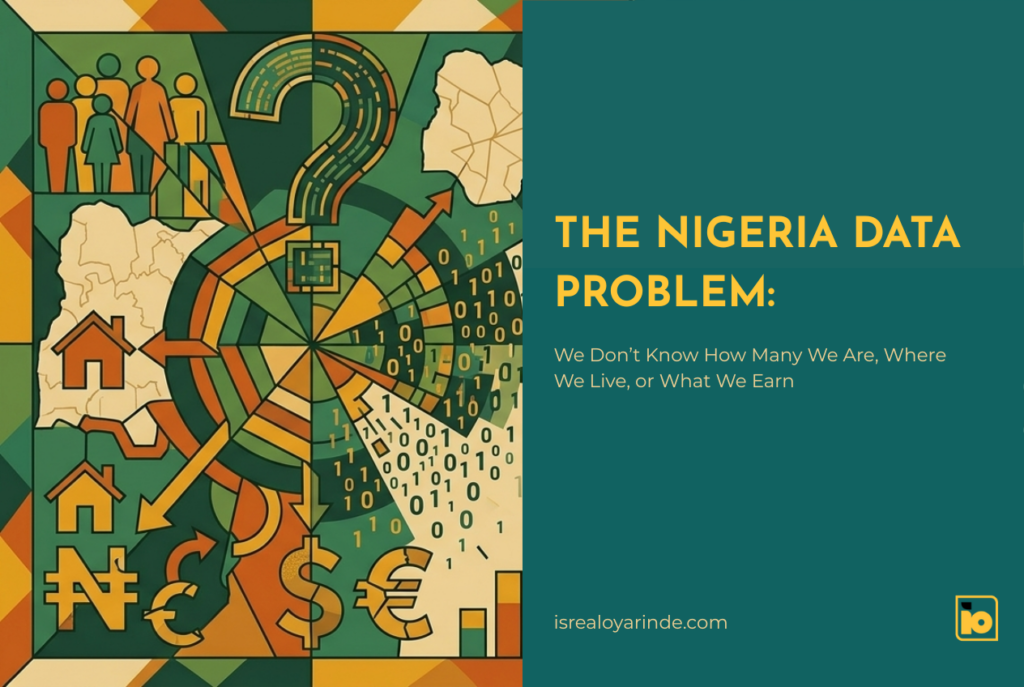
In God we trust, all others bring data. – W. Edwards Deming In 2023, I was working on a business plan for a client who wanted to launch a logistics company in Kano State. Simple enough, right? Except it wasn’t. We needed basic data. The population of Kano metropolitan area, number of registered businesses, average household income, road network coverage, number of delivery addresses and that is where it became a nightmare. You would think this information would be readily available for the most populous state in Nigeria. You would be wrong. The population figure we found ranged from 9 million to 16 million depending on which source you used. The Natonal Bureau of Statistics had one number, the state government had another. The UN population estimates had a third. The World Bank used yet another figure. And the last actual census was in 2006, nearly two decades ago, when the Kano population was counted at about 9.4 million. In a state growing at maybe 3 percent annually, the current population could be anything. We were literally guessing and our guesses were not even informed by any reliable data. The number of registered businesses? No comprehensive database exists. Average household income? The NBS does household surveys, but the sample sizes are small, the methodology is questionable, and the data is years out of date by the time it is published. Road network coverage? I called three different agencies and got three completely different answers. Number of delivery addresses? Nigeria does not have a functional address system. Most streets in Kano do not have names. Most houses do not have numbers. How do you run a delivery company in a country where you cannot describe where people live? That experience crystallized something I had been thinking about for years. Nigeria does not have a data problem, Nigeria has a data crisis. We are running a country of over 200 million people essentially blind. We do not know how many we are. We do not know where we live. We do not know what we earn. We do not know what we produce. We do not know what we consume. And because we do not know any of this, every policy decision is a guess, every budget is fiction, and every business projection is built on vibes and In Sha Allah. This is not a minor administrative inconvenience. This is a fundamental governance failure that affects every aspect of Nigerian life, from healthcare to education to infrastructure to security. You cannot solve problems you cannot measure. You cannot allocate resources to populations you cannot count. You cannot plan for a future you cannot model. And yet here we are, the giant of Africa, stumbling around in the dark because we refuse to turn on the light. The Census Catastrophe Let us start with the most basic data point of all. How many Nigerians are there? The honest answer is nobody knows. Nigeria’s last census was in 2006. It counted 140 million people, a number that was immediately controversial. Northern states claimed they were undercounted. Southern states claimed the north was overcounted. Ethnic groups accused each other of inflating numbers for political advantage. The census became not a statistical exercise but a political weapon, because in Nigeria, population determines revenue allocation, political representation, and power. The 2006 census itself was riddled with problems. Enumerators were poorly trained. Some areas were inaccessible due to security concerns. The technology was outdated. There were widespread allegations of manipulation. The results were challenged in court by several states. And yet, nearly twenty years later, this deeply flawed count remains the official basis for planning in Africa largest economy. The World Bank and the UN use projections based on this flawed baseline, which means their estimates are also unreliable. A new census has been planned, postponed, replanned, and re-postponed multiple times. The National Population Commission has been promising a new census for over a decade. Each time, the exercise is derailed by political disagreements, funding shortfalls, or security concerns. Meanwhile, the gap between our population estimates and reality grows wider every year. Are we 210 million? 220 million? 230 million? Nobody can say with confidence, and the margin of error is not a few percentage points but potentially tens of millions of people. The political dimension of the census cannot be overstated. In Nigeria, population is money and power. Federal revenue allocation is partly based on population. States with larger populations get more money. The number of House of Representatives seats is based on population. So every census becomes a high-stakes political battle. Until we can decouple the census from resource allocation, or find some way to make the count politically neutral, we will continue to fight over numbers instead of collecting them. NBS and the Methodology Problem The National Bureau of Statistics is supposed to be the authoritative source of data on the Nigerian economy and society. In fairness, the NBS does important work with limited resources. But the limitations are severe, and they undermine the reliability of virtually everything the NBS publishes. Take the unemployment figure for example. For years, the NBS reported Nigeria’s unemployment rate as being in the low single digits, which was laughable to anyone who had walked through any Nigerian city and seen the armies of young people with nothing to do. The problem was methodological. The NBS was using the International Labour Organization definition of unemployment, which counted anyone who had done even one hour of work in the past week as employed. A man who washed one car for two hundred naira on a Saturday was classified as employed. A woman who sold three sachets of pure water on a Monday was employed. The definition bore no relationship to the reality of Nigerian labour markets. Eventually, the NBS adopted a broader measure that better captured underemployment and disguised unemployment, and suddenly the combined unemployment and underemployment rate jumped to over 33 percent. The economy had not changed. The measurement
Can and Should the Government Solve All Issues?
Every four years, Nigerians go to the polls looking for a messiah. Not a president, not a governor, not a local government chairman —a messiah. Someone who will fix the roads, bring light, lower prices, create jobs, cure corruption, and somehow make garri affordable again. All at once. Preferably within the first 100 days. And every four years, we are disappointed. Shocked, even. As if the last ten electoral cycles did not teach us anything. I am not saying the government does not matter. It matters enormously. But there is a dangerous gap between what the government should do, what the government can do, and what Nigerians expect the government to do. And that gap is where our collective frustration lives. So let us have an honest conversation: can the government solve all our issues? Should it even try? The Nigerian Messiah Complex We have a peculiar relationship with government in Nigeria. We simultaneously despise it and depend on it completely. We curse the governor on Twitter and then write him a letter begging for school fees. We call politicians thieves, then queue up at their houses for “stomach infrastructure” during elections. This is the Messiah Complex at work. The belief that somewhere out there, there is a leader who, if only they could get into power, would transform Nigeria overnight. Tinubu will do it. Obi will do it. Atiku will do it. Insert-name-here will do it. Nobody is doing it. Not because they are all individually terrible (though some are), but because the expectation itself is impossible. No single human, no single administration, can fix a country with 200 million people, 36 states, 774 local governments, hundreds of ethnic groups, decades of infrastructure neglect, institutional decay, and a culture that treats public office as a personal ATM. The Messiah Complex is not just naive. It is actively harmful. It encourages passivity. If the government is supposed to fix everything, then your role as a citizen is simply to wait, complain, and vote every four years. You do not organize your community. You do not maintain your street. You do not build parallel systems. You just wait for the saviour who never comes. Our streets have failed, created wealth through corruption, and took a lot from the society we have. Where we differ is there is no real debate about whether the government should do more. The overwhelming demand, the overconsumption of government promises, and the lack of proper systems and due process all combine to create the illusion that more government is always the answer. What Government Should Do (And Cannot Escape) Let me be clear. There are things that only the government can and should do. As an entrepreneur, I am all too aware of the costs of government failures in my business. These crucial services are non-negotiable, and no amount of “self-reliance” rhetoric changes this. These are the government’s core functions. The problem in Nigeria is not that the government tries to do these things. The problem is that it fails spectacularly at them while simultaneously trying to do a hundred other things it has no business doing. What Government Should Not Do (But Tries Anyway) Here is where it gets controversial. The Nigerian government has a long history of inserting itself into areas where it has no comparative advantage, usually with disastrous results. The fuel subsidy, which cost Nigeria over N4 trillion in 2022 alone, is the mother of all price control disasters. Instead of letting the market price signal direct investment into refining capacity, we spent decades subsidizing consumption of imported fuel, enriching a cartel of importers, and starving the economy of resources for health, education, and infrastructure. The government is terrible at targeting, terrible at distribution, and terrible at verification. The common thread in all these failures is that the government tried to be a market actor instead of a market enabler. The government should create the conditions for economic activity —stable rules, fair enforcement, sound infrastructure not try to be the economy itself. The Private Sector Gap Now, some of you are thinking: “If the government steps back, the private sector will fill the gap.” And in many areas, that is true. Nigerian entrepreneurs are among the most resilient and creative in the world. We build fintech platforms that bypass broken banking infrastructure. We create logistics networks that work despite terrible roads. We generate our own electricity. We dig our own boreholes. We are, in many ways, already running a parallel economy. But the private sector has its own limits, especially in Nigeria. This is the fundamental tension: the government is terrible at delivering services, but the private sector will not deliver them to everyone. There are market failures that only the government can address, and there are government failures that only markets can correct. The answer is not more government or less government. It is better government in its lane, and more space for private enterprise in theirs. Self-Reliance in a Failed State Let me tell you a story. In my estate in Lagos, we got tired of waiting for the government to fix our road. It had been bad for three years. We wrote letters. We called the local government. We tagged the governor on Twitter. Nothing happened. So we taxed ourselves. Every household contributed. We hired a contractor. We fixed the road. Cost us about ₦15 million collectively. It has lasted longer than most government roads, probably because we supervised the contractor ourselves instead of letting someone’s cousin do it with substandard materials. This is self-reliance in a failing state. And it is happening all over Nigeria. This is not ideal. It creates a two-tier society where the wealthy can buy their way out of government failure while the poor suffer. But it is the pragmatic response to a government that collects taxes and delivers almost nothing in return. If you treat the government like a service provider, you have purchasing power to ask: why am I paying this
How to Develop a Growth Mindset in a Country That Rewards Survival Over Ambition
I grew up in a household where the highest compliment anyone could give you was that you were ‘sharp.’ Not intelligent, not hardworking, not creative —sharp. Being sharp in the Nigerian context meant you knew how to navigate difficult situations, avoid trouble, and squeeze something out of nothing. Sharpness was the supreme virtue because sharpness kept you alive, and in a country where systems fail regularly and institutions cannot be trusted to protect you, staying ahead economically, physically, and socially was the primary objective. Nobody talked about the growth mindset. The conversation was always about today. How to survive today; how to eat today; how to pay rent today. And I understand why. Why the Growth Mindset is the Most Important Skill You Will Build When your daily existence is a series of obstacles that require all your energy and ingenuity just to survive, thinking about personal growth feels like a luxury you cannot afford. But the truth is that the survival mindset, while necessary and even admirable, is also a trap. It keeps you alive but it also keeps you exactly where you are. It is like treading water, you do not drown, but you do not go anywhere either. The growth mindset is what takes you somewhere, and developing it in a country like Nigeria is one of the most important and most difficult things you will ever do. Understanding the Survival Mindset and Why Nigeria Breeds It Before we talk about growth mindset, we need to understand what we are working against. The survival mindset is not a character flaw. It is a rational response to an irrational environment. When you live in a country where inflation can wipe out your savings overnight; where your employer can owe you six months of salary without consequence; where a medical emergency can bankrupt your entire extended family; and where the government’s primary function seems to be extracting resources from citizens rather than providing essential services, the first instinct you develop is survival. When this is your reality, of course you develop a short-term, defensive, risk-averse orientation. You focus on immediate returns because the future is uncertain and long-term investments feel like gambling. You prioritize social capital over genuine connections because knowing the right people, being connected, being ‘plugged in’ is the ultimate strategy in a country where formal institutions do not work. All of these make perfect sense as a survival strategy, and I would never criticize anyone for adopting it. I have seen instances where patients are turned away from public hospitals because “there are no beds”, yet one phone call to the right person could make a bedspace materialise. Personal relationships are the only reliable safety net where institutions are unforgivably weak. But I want you to understand that while the survival mindset keeps you safe, it also keeps you small. It prevents you from taking the calculated risks that lead to breakthrough growth. It prevents you from investing in skills and knowledge that pay off over years rather than weeks. It prevents you from building businesses and institutions that create lasting value. Ẹni tí ó bá bẹ̀rù ojúbọ a lọ sí ọjà —he who fears the shrine goes to the market instead. But the market of survival only offers subsistence, not abundance. The Nigerian environment actively punishes growth-oriented behavior in subtle and not-so-subtle ways. The formal financial system offers savings rates that are consistently below inflation, which means that saving money in a Nigerian bank is actually losing money in real terms. And if you decide to start a legitimate business, barriers to entry are so formidable that many people conclude that hustling and trading are more rational strategies than building formal enterprises. I have watched brilliant, ambitious young Nigerians get beaten down by this environment until they abandon their dreams and settle for survival. Not because they lacked talent or drive, but because the system made growth so difficult and survival so all-consuming that there was simply no space left for aspiration. This is the real tragedy of the Nigerian survival mindset. It is not that people choose survival over growth, it is that the system gives them no other viable choice. What Growth Mindset Actually Means if You Are a Young Nigerian The term ‘growth mindset’ was popularised by Carol Dweck, a psychologist at Stanford University, and it refers to the belief that your abilities, intelligence, and talents can be developed through effort, learning, and persistence, as opposed to a ‘fixed mindset,’ which assumes that these qualities are innate and unchangeable. In the Nigerian context, I want to expand this definition beyond individual psychology to include a set of practical orientations that enable long-term growth despite environmental obstacles. A Nigerian growth mindset includes the belief that you can improve through learning and effort, but it also includes the strategic patience to invest in long-term outcomes, the courage to take calculated risks in an uncertain environment, the discipline to resist the social pressure for immediate consumption, and the resilience to persist through setbacks that would crush most people. It is not about being naively optimistic or ignoring the very real obstacles that Nigerian life presents. It is about choosing to invest in your future even when the present is demanding all your attention, and doing so in a way that is smart, strategic, and grounded in reality. This is hard. I am not going to pretend it is easy. But it is the only path I know that leads from where you are to where you want to be. Rewiring Your Relationship with Failure and Risk One of the most crippling aspects of the survival mindset is its relationship with failure and risk. In survival mode, failure is catastrophic because you have no safety net. If your one income source fails, you cannot eat. If your small business collapses, you cannot pay rent. If you invest your savings and lose them, there is no social security system to catch you. This fear of failure
How Lean Is Lean? The Lean But Not Overly Miserly Startup Methodology
I once spent three months manually updating a spreadsheet that a $15/month tool could have automated in seconds. I told myself I was being ‘lean.’ I was being an idiot. Here is everything I have learned about the difference between the two. As a business owner, there is a fine balance between being lean and being miserly. Starting out in business, some of my decisions were wasteful, and now, I try to be efficient and judicious with resources. However, being efficient and lean does not mean “starving your business.” It does not mean refusing to experiment or trying to extract as much value as possible without loosening up a growth constraint. We hear stories of Jeff Bezos using a door as a desk, or Nigerians soaking garri for years while building their hustle, and we internalize a dangerous lesson, which is not the main point they are trying to pass across by the way, that suffering is a KPI. It is not. Suffering is a bug, not a feature. The difference between being lean and being Miserly is that one optimizes for speed of learning and the other optimizes for an inevitable death. What “Lean” Actually Means (Thank You, Eric Ries) Let us start with what lean actually means because the word has been abused more than “disruptive” at a Lagos tech meetup. Eric Ries published The Lean Startup in 2011, and the core idea is deceptively simple: minimize waste by building only what customers actually want, using a Build-Measure-Learn feedback loop. You build a Minimum Viable Product (MVP), measure how customers respond, learn from the data, and iterate. The goal is validated learning, not validated suffering. Ries was influenced by Toyota’s lean manufacturing, where waste (“muda”) is anything that does not add value for the customer. Notice that Toyota did not say “use the cheapest steel” or “skip quality control to save money.” They said eliminate unnecessary steps. That is a critical distinction. Y Combinator’s data on thousands of startups tells an interesting story. According to their analysis, the number one reason startups die is not running out of money — it is building something nobody wants. The second biggest killer is running out of cash, but often because the founders spent money on the wrong things (fancy offices, premature hiring, vanity marketing) rather than on validating their core hypothesis. Paul Graham famously said startups do not die from starvation; they die from indigestion. Spend on learning. Cut everything else. The Penny Wise, Pound Foolish Trap True Lean Methodology is about minimizing waste, not minimizing spending. Building something nobody wants is the ultimate waste. Using capital to find out what customers actually want faster? That is lean. It is easy to confuse the two, and experience is the best teacher, but even seasoned founders still get it wrong. Here is a simple example: say you refuse to pay for a $20/month software subscription (roughly ₦30,000) that would automate a 5-hour task, choosing instead to do it manually to “save money.” If you value your time as a CEO at even ₦5,000 per hour — which is extremely low — that 5-hour task costs the company ₦25,000 every single time you do it. The software costs ₦30,000 for the whole month. By being “miserly,” you are actually burning equity and executive bandwidth on administrative chaff. Your job as a business owner is to know what problem you solve and what outcome you create. Everything else is overhead. And overhead should be automated, delegated, or eliminated. Now, there are legitimate reasons to be careful with spending. If paying for the tool will adversely affect your runway, then spending some extra time to handle a task manually so you can redirect resources into where you are seeing more traction is worth it. Also, not all tools really optimize your process. One thing I do every year is audit and eliminate pricey tools and find better deals to avoid tool bloat. Some Nigerian SaaS tools worth knowing about: The Cost of Cheap Talent If you are starting out, I think you are better off with people who have intermediate expertise, for want of a better phrase. When you are pre-revenue, shelling out for top talent that does not have structure to excel will only cause you to waste resources because they will charge top rates. However, once you have traction, two things must happen: first, make sure the people who started with you grow as the company grows; and second, stop trying to hire the cheapest possible staff. For example, a senior developer will obviously charge more. In Nigeria, a solid mid-level full-stack developer charges between ₦500,000 to ₦1,500,000 monthly. A junior might cost ₦150,000 to ₦300,000. That looks like savings until you realize the junior will delay your time to market by three to six months and create technical debt that will crash your software on launch day. When you optimize solely for cost extraction rather than value creation, your product feels “enshittified” from Day One. I have been there. It cost me a year on a relevant product launch. The cost of fixing bad code, re-hiring after firing the incompetent cheap hires, and the reputational damage of a buggy launch is always higher than the cost of hiring right the first time. Y Combinator’s Sam Altman (before he went off to run OpenAI) used to say that you should spend the first 25% of your budget on getting the best possible first three to five hires. Because those people set the culture, the code quality, and the operational DNA of your company. Cheap out on them and you are building on sand. Infrastructure Is Not a Luxury We have obvious, if unique, infrastructure challenges in Nigeria. Investing in tools to make your work smooth is not optional —it is essential. My two best purchases work-wise are my fully off-grid solar and inverter system and my Starlink. My biggest issues used to be electricity and internet connectivity: network failing and electricity